

Subscribe To Our Newsletter!

.svg)

PEAKS & PUEBLOS
Subscribe To Our Newsletter!
Subscribe To Our Newsletter!
Subscribe To Our Newsletter!
Subscribe To Our Newsletter!
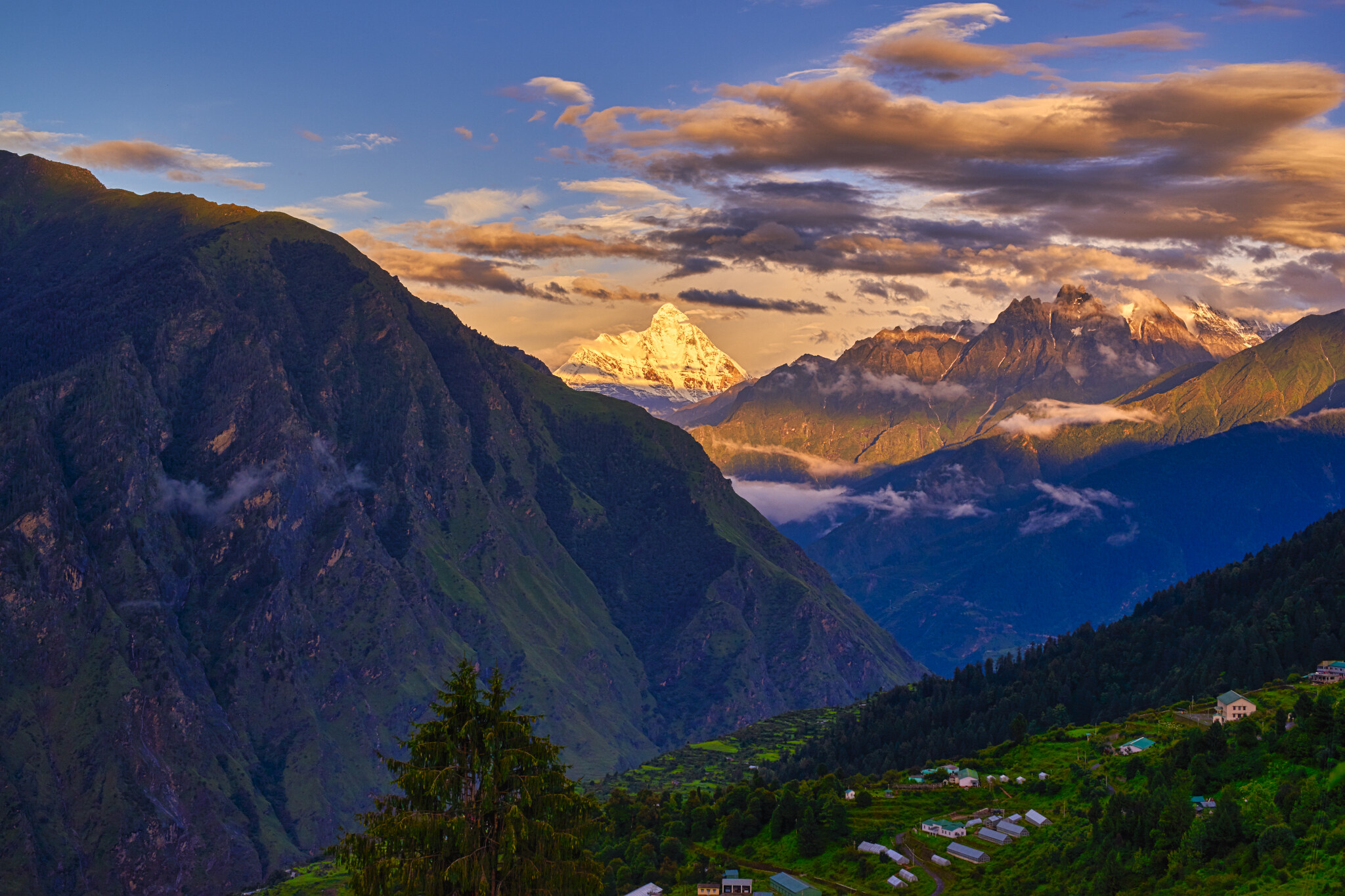
India’s Nanda Devi, part one: encountering a mountain goddess
The first in a series exploring the strange stories of the world’s 23rd highest mountain and what we might learn when the mountains are gods.

A mountain makes fire
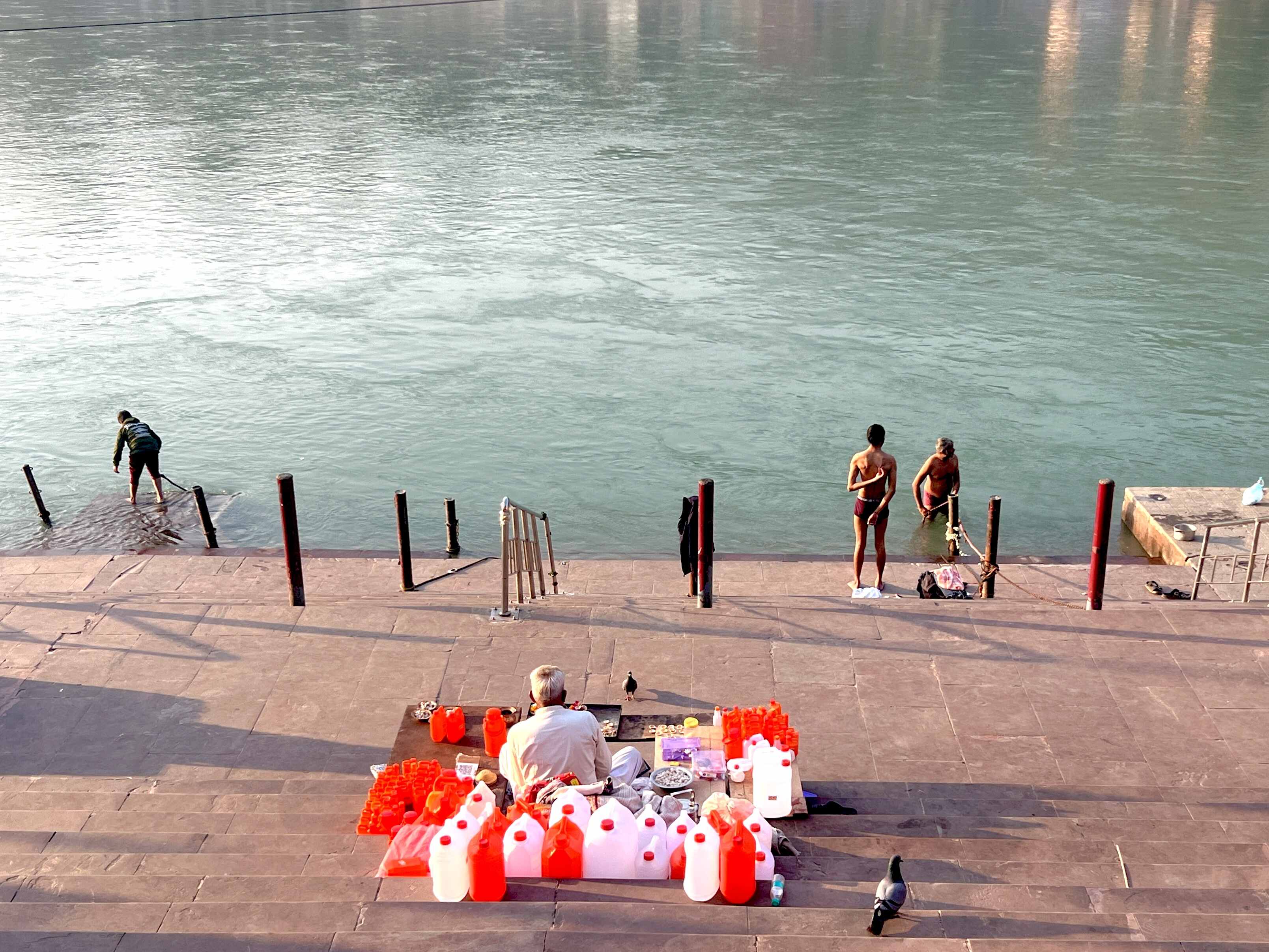
In winter, the holy city of Rishikesh is something of a dream. Perched on the banks of the Ganges, pilgrims, holymen and yoga-loving travellers jostle for serenity as the cool mountain air mingles with the beaming Indian sunshine. The streets, ghats and temples that line the river are filled with sights, sounds and smells in abundance and the city is full of life.
Ten hours uphill, however, life is hard. Joshimath, the final town before India meets Chinese Tibet, is in effect the end of the road. With the border closed and many neighbourhoods condemned by subsiding hillsides, the town was almost completely abandoned when I arrived in temperatures falling as low as -30 degrees centigrade.
It was January 2026 when I made this journey high into Garhwal-Kumaon Range of the Himalayas. Arriving after nightfall, as the rickety bus pulled into town, I found myself, as the only passenger left, stepping out into a gloomy place. I immediately questioned my choices. Why, from all the wonderful places in India, would I choose to come here, alone, in the depths of the Himalayan winter?
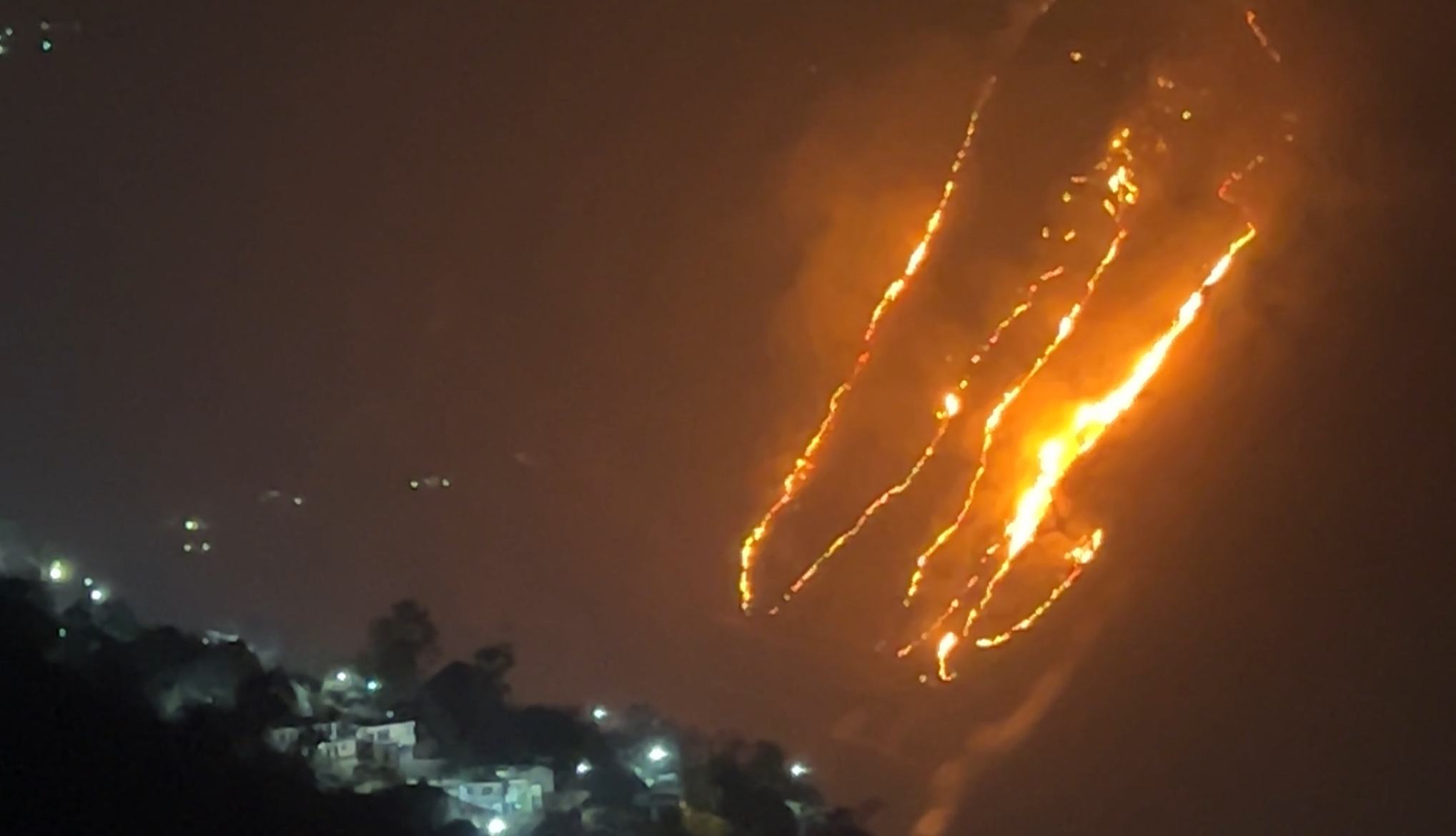
This pondering turned to survival as I searched for somewhere to stay. Thankfully, after visiting several hotels that were closed for the winter, I found one with a bed as well as extra duvets and blankets to supplement my sleeping bag. Amid my search, I was bewildered to witness, across the river, the sight of the mountainside on fire.
At first, I assumed this was the result of slash and burn, but it soon became clear the fires were on ground far too steep for farming. Asking the locals, I was told that rocks falling from the mountains sometimes set the dry vegetation ablaze. This was the driest winter since records began, and fires had been reported throughout a region sorely needing snow.
I was perplexed. I had never heard of this. Yet it does exist. It’s called rockfall-induced ignition and on that first night, as I watched the bewitching wildfire from across the valley, I was reminded of two things. Firstly, mountains, however solid they appear, are always in motion. Secondly, when it comes to the landscapes we live among, this world never ceases to upend what we think is possible.
In a sense, this was my purpose in the Himalayas: to learn, and to do so by listening. I wanted to hear from the people who live in these mountains, but also, where possible, from the mountains themselves. For me, this was an attempt to listen deeply to a landscape, a place and a bioregion, and perhaps even encounter the mountain as a more-than-human other, and a being, in its own right.
The being in question is Nanda Devi.
By sharing my own experiences there, and by retelling some of the remarkable stories I heard along the way, this series aims to continue that process of listening and learning from this particular, spectacular landscape.
Introducing the “bliss-giving goddess”
The world’s 23rd highest mountain is an astonishingly beautiful colossus, set amid a spectacular, circular crown of other mountains. For climbers and adventurers, this place towering into the sky holds legends of almost unparalleled intrigue, and the mountain’s physicality, geography and geology are all extraordinary. However, there’s something else, because this mountain is both a mountain and a god.
More specifically, she is a goddess. A feminine deity, Nanda Devi literally translates as the “bliss-giving goddess”. Believed by millions to be one of the world’s most sacred places, she is the “daughter of the Himalayas” and, however skeptical we might be, her powers are extraordinary and the depth of belief in them is very real.
To many Hindus, Nanda Devi is the seat of Shiva’s consort, Parvati. For the upland communities of the region, however, the mountain herself is their 'Kuldevi', the spirit that guides and protects local people, their lineage and the place within and from which they exist. Embodied in physical form by the mountain, she is also omnipresent, and a mountain beyond mountains.
A protector and benefactor, she represents - and, from her waters literally provides - birth-giving vitality. To some, she is described as an "angry virgin" (or 'kanyā'). Pure, yet unattainable, she is the source of potentiality itself, but also an arbiter of justice, wielding overwhelming forces of destruction and a primordial violence capable of wiping out entire communities in one of India’s most disaster-prone regions.
Beyond the myths, her immense significance is also physical. This is because this mountain’s glaciers go on to nurture the land upon which over 650 million people depend. Together with Gangotri to the West, this is the source of the Ganges, or Mother Ganga, who is herself considered a goddess of profound sanctity.
For this fact alone, it is little surprise she is held in such esteem. While visiting, it became clear that this is a place of extremes: inspiring both the spellbinding power of the sublime and the hallucinating vertigo of the abyss. The word "awesome" is overused, but this place really does captivate something in us while simultaneously reminding us of how small and insignificant we are.
Back home, I barely question where the water I drink comes from, let alone how much we depend on nature more broadly. Both universally and directly, when it comes to the rivers, soils and air we depend on, how often do we remember how fundamental these are to our survival, let alone our very existence? Here, in this part of India, I was left in no doubt as to who should be thanked for the life-giving waters that stream out of these mountains.
But Nanda Devi’s status as a goddess goes beyond the waters she provides.
Partly, this must be due to her enormous stature. With two high summits - each of which are believed to be the deity’s breasts - separated by a two-kilometre knife-edge ridge running from East to West, the ridge-lines, faces, cols and glaciers of this gigantic structure are themselves massive features looming over a large region. Traditionally home to the nomadic Bhotia tribes, her 7,816 metre summit is visible from over a hundred of kilometres away.
The mountain’s lower reaches are also something else, something hidden. For beneath her towering peaks, as the high altitude world of rock and ice turns to forests, valleys and rivers full of life - including bugyals, Himalayan meadows famous for their riot of wild flowers - Nanda Devi is embraced by a landscape cut off from the outside world.
This carved basin inside this mountain citadel is now known as the Nanda Devi Sanctuary. A unique biosphere of 380 kilometres² (240 miles²), a wonderland of biodiversity, and is today - together with the famous Valley of Flowers - part of the Nanda Devi Biosphere Reserve, a UNESCO World Heritage Site and one of the most pristine landscapes found anywhere in the Himalayas.
Surrounding this sanctuary - with Nanda Devi in the middle - are twelve colossal protectors, each of which is a six or seven thousand metre mountain higher than anywhere in Europe, North America or Africa. Even in the Himalayas, this is astonishingly unique, and it means that Nanda Devi, although seen and revered over the hills, is beyond reach and untouchable to those who revere her.
The only breach in this Himalayan fortress is the devastatingly deep Rishiganga Gorge, where cliffs of thousands of feet descend into a violent thunder of rocky, glacial waterfalls. Legend claims this place is guarded by the Seven Rishis, ancient hermits who were tormented by demons and now protect the mountain's sanctuary from those foolish enough to set foot in this ferocious onslaught of water, ice and stone.
While Nanda Devi was believed for many decades to be the world's highest peak, it was thought - until 1934 - that this inner paradise had, despite thousands of years of worship, never been entered by a human being. Even in the age of industry and conquest, it took European explorers over fifty years of almost continuous attempts simply to gain entry. When the feat was finally achieved it was described as being "harder than reaching the North Pole".
Despite no mountain being climbed, the story of how the first men established a way into this place has become mountaineering legend and the basis of the modern “alpine technique”. Although fascinating, the story of how this mountain's inner world was finally accessed and the myth surrounding this adventure are a tiny slice of the bizarre and bewildering stories connected to this place.
Meeting the more-than-human mountain
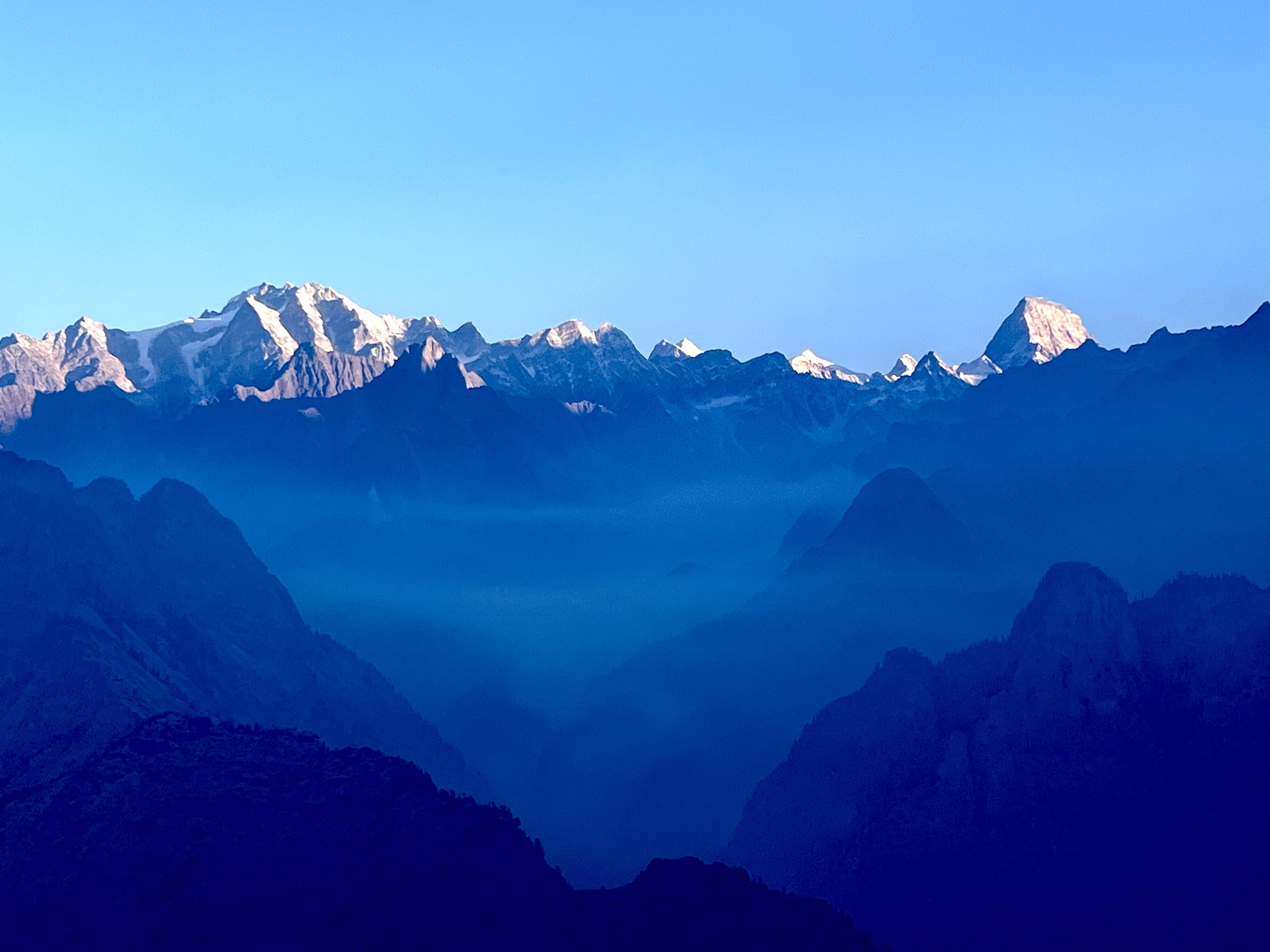
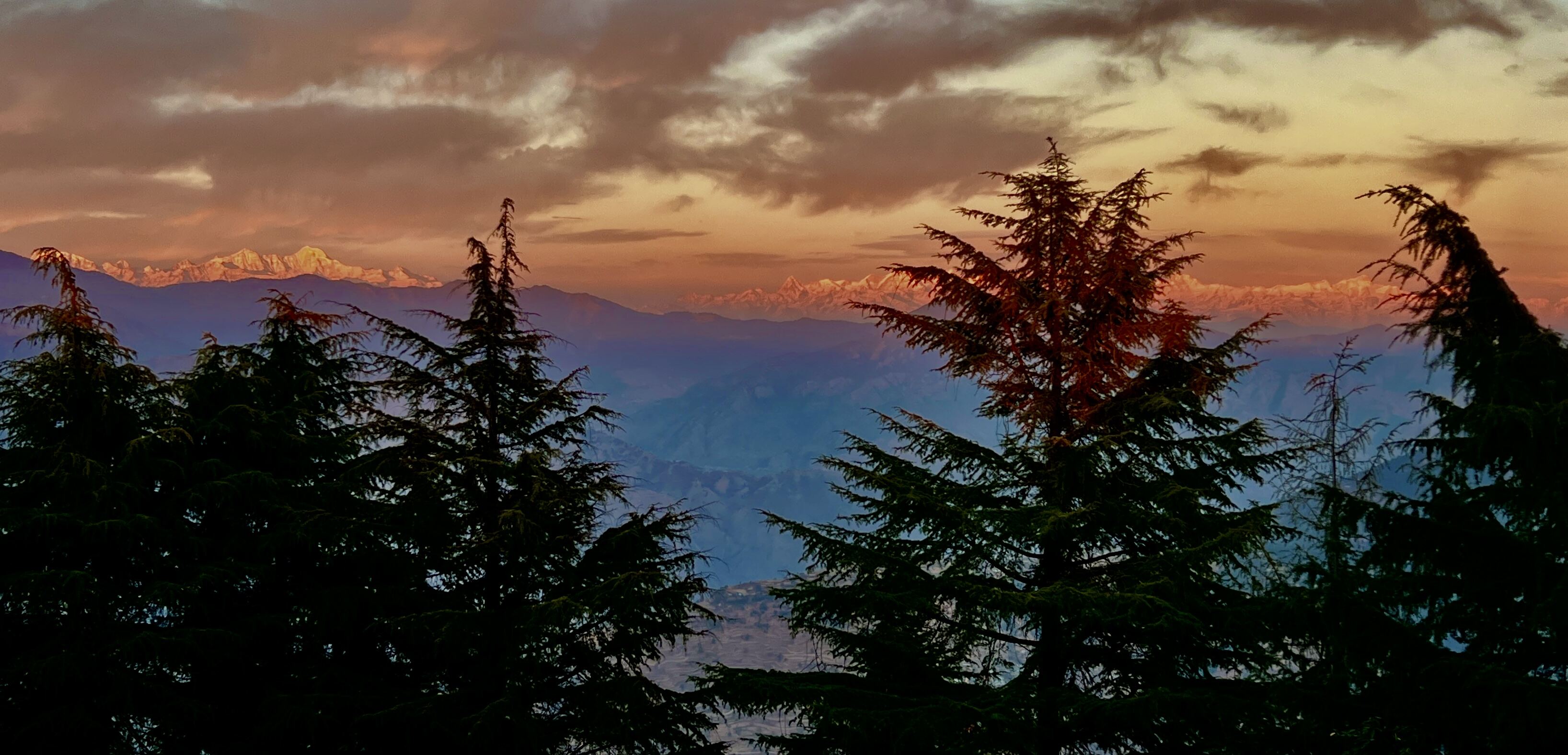
On the third day after my arrival, awaking from a brutally cold night, I made my way to the lookout point where I would first set eyes on this sacred mountain. In one sense, I was there simply to see the mountain. In Hindi, however - I had learned - I was there to "give darshan": to see, and to be seen by, the divine.
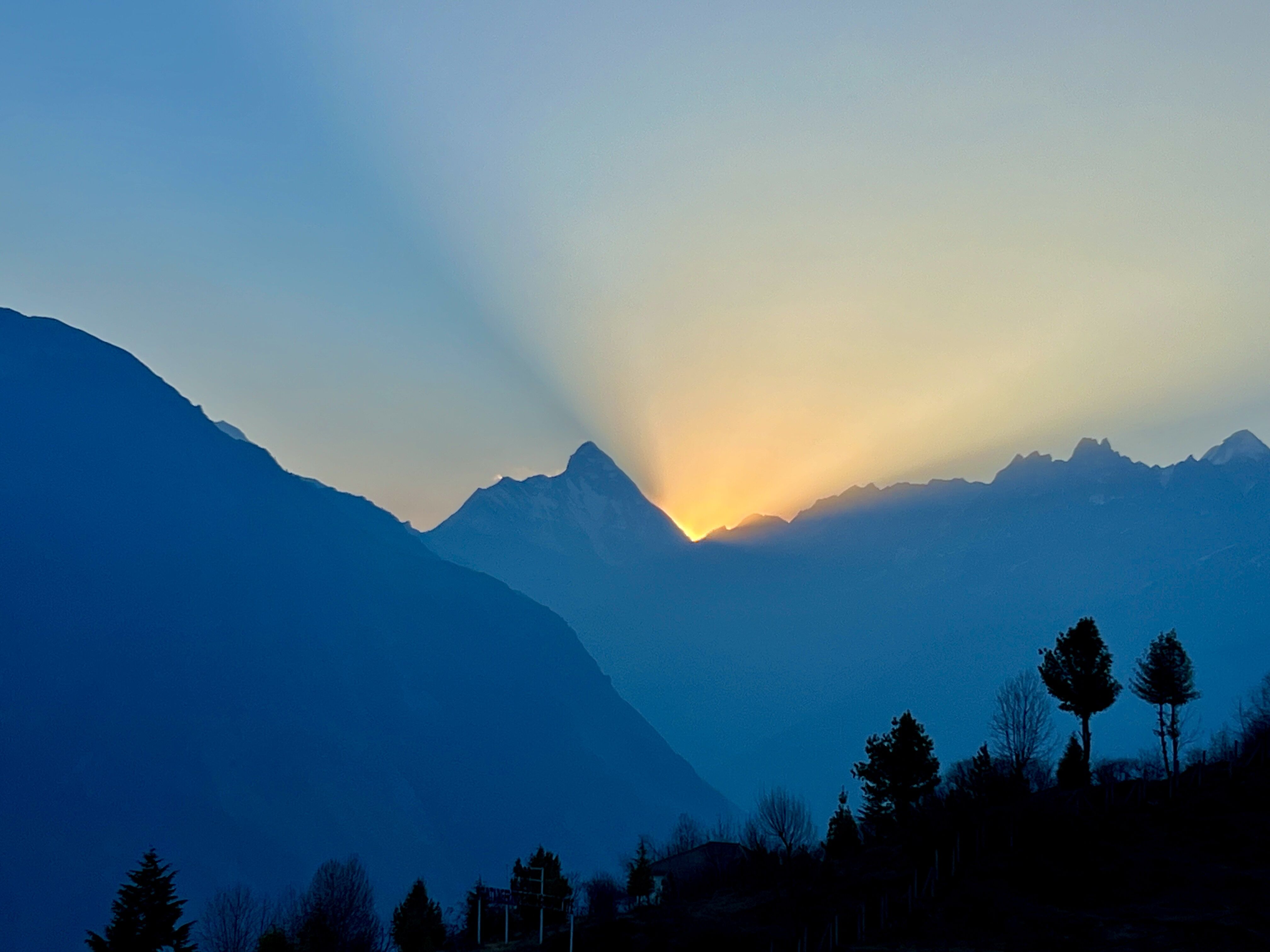
As the sun began to rise, I first saw an illuminated outline of this great mountain's sphinx-like pose. As my body came to terms with the deep freeze of dawn, I was surprised to see from across the horizon that it was over the Nanda Devi herself - from among a boundless range of peaks - that the sun was rising. At first casting her vast silhouette, I watched as jets of light broke across the sky. Flooding like a fan, the sunshine rapidly descended through the ice cold air as the mountain's frame went from black to blue.
And then, there she was. I could now see the definitions of her white ice and black rock, and I began to appreciate this stunning peak with my own eyes. In many ways, this was simply a new dawn on a new day, but in that moment I immediately understood why this mountain is considered sacred.
While the back of my head remained bitterly cold, the sunshine finally hit my face. The warmth of the light immediately gave my body hope that life here would once again be possible, even after the darkest moments of the coldest night.
Awestruck for sure, I realised that the power of the sunshine set free by her figure was, in a very real way, changing the state of my body. "Ah, she is a goddess for sure, but her divinity lies in her interconnectedness". How she affects me, you, us, and the world around her, this is where we find her godliness.
Stories from Nanda Devi
As I descended the high mountains, I reflected on how it was from this landscape where the most ancient myths of the world's oldest religion, Hinduism, first took root. I realised that I was just the latest - in a history of thousands of years - to come in search of what this mountain has to teach or, more simply, to be affected by her.
The articles to come in this series are about how remarkable (and at times bizarre) this place is, but I also want to ask: if mountains can spark fires in the deepest cold of the material world, can they also help us see and hear beyond ourselves? Can they help us understand more about how we are bound together?
As we navigate this era of surreal crisis, as we humans commit our planet to its sixth mass extinction event, it seems to me we might do well to listen to these more-than-human relations of ours. We and all life depend on the natural world for everything - so perhaps it's high time we listened to what it can teach us.
Many of us are beginning to hear what rivers, forests and mountains have to say. If we can see these features not as deadened resources but as other beings - not necessarily gods, whole, symbiotic kin who are active in the processes of becoming - perhaps we can finally recognise how fully our landscapes and mindscapes merge.
From there, is ecological solidarity so hard to imagine? Might we learn to care more for others, whose reciprocity we depend on? Might this not be, in the end, the only rational, ethical recourse we have left and the clearest way to look after both our world and ourselves?
Title image credit: Anirbar Ray
Sam Williams
A beyond-profit project manager, community builder and social entrepreneur, Sam shares stories about mountains, climbing, nature connection, and the meaning of adventure in a more-than-human world. He is currently working on a series entitled The Mountains are Gods exploring stories of sacred mountains. To find out more visit Reflexive Ecology. You can also find him on LinkedIn and Instagram.
Latest posts

After injury, failure, and a mental wall that no amount of trail could fix, one runner rediscovers why the distance was never really the point.
A short photo essay of daily life in East Africa's ancient coastal communities along the Indian Ocean.
Subscribe To Our Newsletter!
PEAKS & PUEBLOS
Subscribe To Our Newsletter!
PEAKS & PUEBLOS
A global adventure community, celebrating stories of meaningful travel and exploration.
Subscribe To Our Newsletter!
Subscribe To Our Newsletter!
PEAKS & PUEBLOS
Subscribe To Our Newsletter!