

Subscribe To Our Newsletter!

.svg)

PEAKS & PUEBLOS
Subscribe To Our Newsletter!
Subscribe To Our Newsletter!
Subscribe To Our Newsletter!
Subscribe To Our Newsletter!
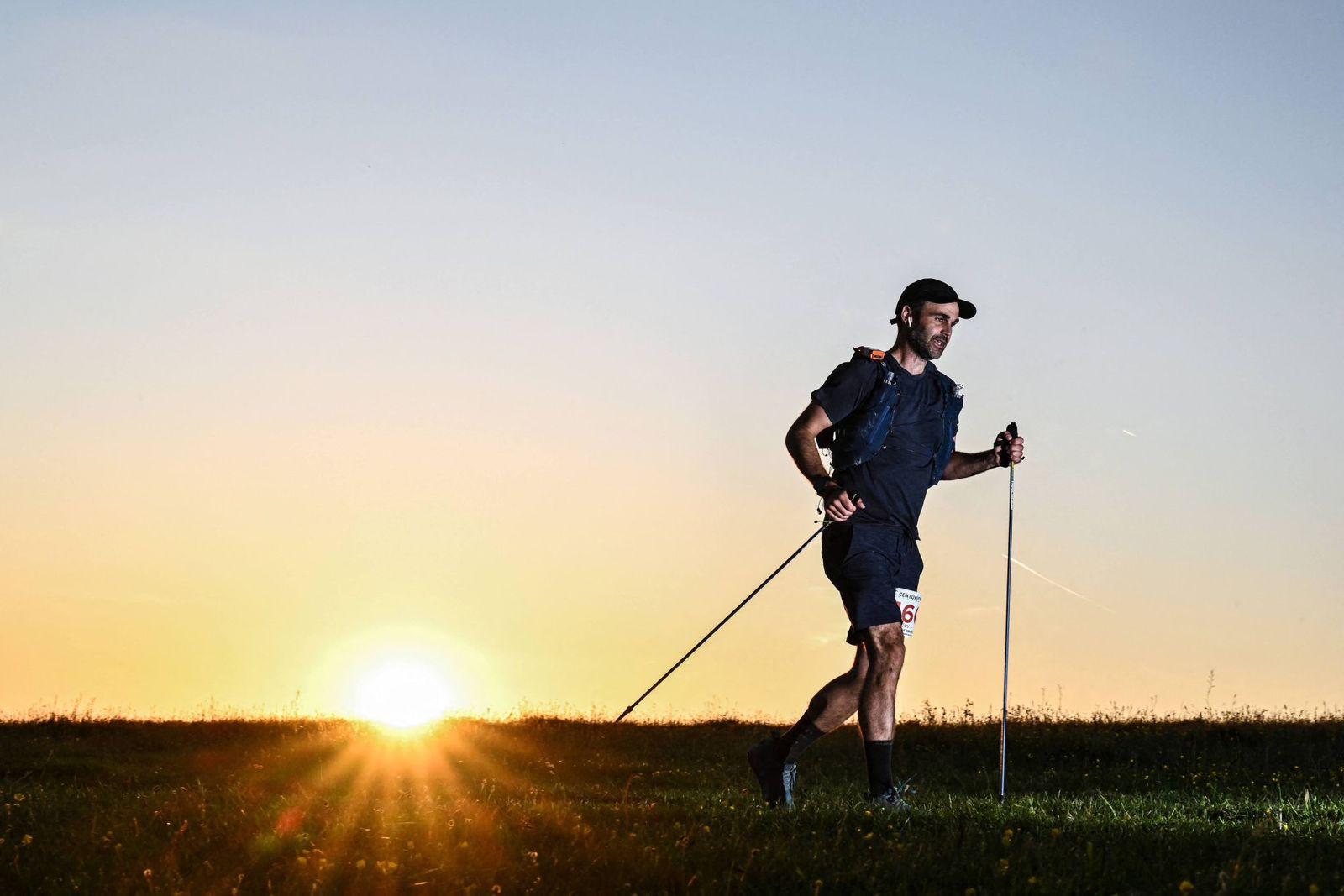
Chasing a 100 mile ultramarathon and finding myself
After injury, failure, and a mental wall that no amount of trail could fix, one runner rediscovers why the distance was never really the point.

I first started running around fifteen years ago. It wasn’t something I was naturally drawn to. I cycled, surfed, and loved being outdoors - but just running? Could it really be fun?
I began with short distances and soon found myself enjoying all the small challenges: beating my time, running a little further than last week. Those small wins led to half marathons, then marathons, with a faster finish time always in my sights. For a while, progress felt linear. Then life got busier, I got older, and that singular focus on speed started to feel less enjoyable and less realistic. Injuries crept in too: stress fractures and niggles I put down to overtraining and too much road running.
At some point it became clear that I wasn’t going to be faster than I was five or ten years ago. That realisation pushed me toward trail running, and everything changed.
Trail races are almost impossible to compare. Elevation, terrain, weather, navigation, and even participant numbers all affect finishing times. Distances are rarely exact - 13.1 miles or 26.2 miles becomes more of a suggestion than a rule. And that’s exactly what I loved. Once I discovered trail running, the joy of running really began to grow. Nature, adventure, discovery - it all made sense.
I loved running a trail and realising a run could link to another stretch of woodland, moor, or coast path next time. I loved the logistics of starting at point A and finishing at point B, sometimes finding supplies along the way. Running became less about numbers and more about experience.
As I ticked off more “halves” and “fulls,” a new itch started to emerge - one that grew with every ultrarunning documentary I found on YouTube. I wanted to go longer. Much longer.
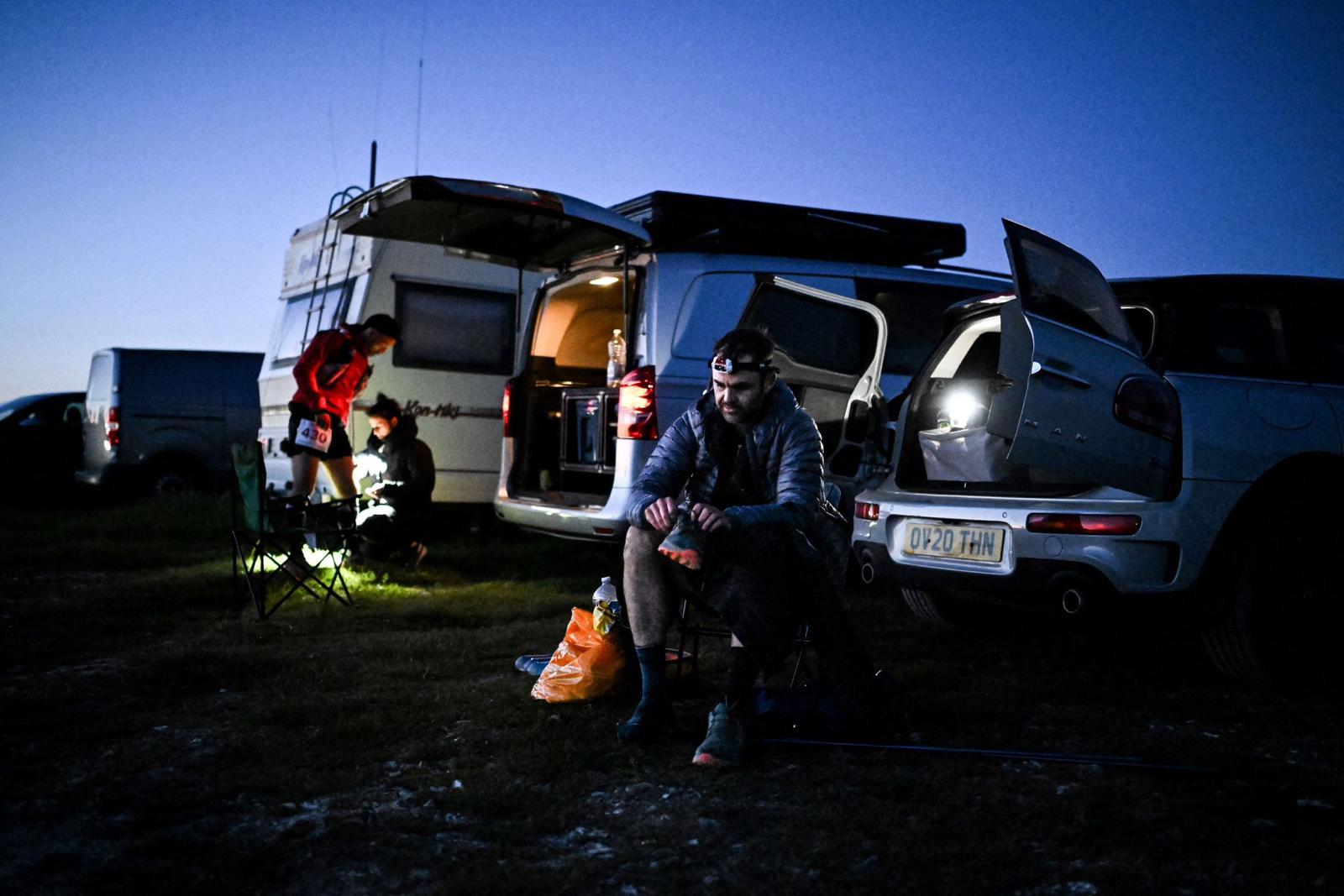
The first target that felt realistic was 100km. That became the plan. I’d run 20 miles to work. I trained as much as I could to make it achievable. Along the way, I managed to avoid the usual ultrarunning horrors - blisters, chafing, major injuries - which made the whole process far more enjoyable.
But while I trained for 100km, the thought of 100 miles kept creeping in. I didn’t say it out loud - I hadn’t even run 100km yet - but it was there. The pull to go longer was about curiosity more than anything. I wanted to see what my body was capable of. I believe most people underestimate what they can do, and that endurance is as much about mental resilience as physical fitness (though that helps too).
Could I keep going when it hurt?
Could I convince my legs they still had something left when they were screaming to stop?
Could my mind override my body?
The trails became a place where my mind could wander, recover from stress, solve problems from the day or week, and heal. I wanted to harness that feeling - to use it to keep my body moving forward.
In July 2021, I lined up for my first 100km race: Race to the Stones. My target was sub-12 hours. I loved that race. There were tough moments, incredible support, and times when everything hurt - legs, arms, stomach. Miles felt like double miles. I realised partway through that 12 hours was unrealistic for a first attempt.
But I kept going. I talked my body forward. I crossed the line just two minutes shy of 13 hours.
Lying on the ground at the finish, I looked around and said, “I’m never doing 100 miles. That’s insane. Another forty after that? No chance.”
As most runners know, that pain fades - and the desire for the next challenge grows. Before long, I’d signed up for the Dragon 100: a 100-mile race from the Gower Peninsula to Cardiff. It was July 2022, so it didn’t take long.
That race took place on the hottest day of the year, starting at 4pm was helpful as it meant there were maybe 5/6 hours in the full heat of the sun before the respite of nightfall. There were many steps into the unknown, first was the distance and how to approach it and if it was doable, second was running through the night and how that would feel, third, how would my mind and body cope with the lack of sleep and pushing to keep moving for what would more that likely be 24+ hours of running.
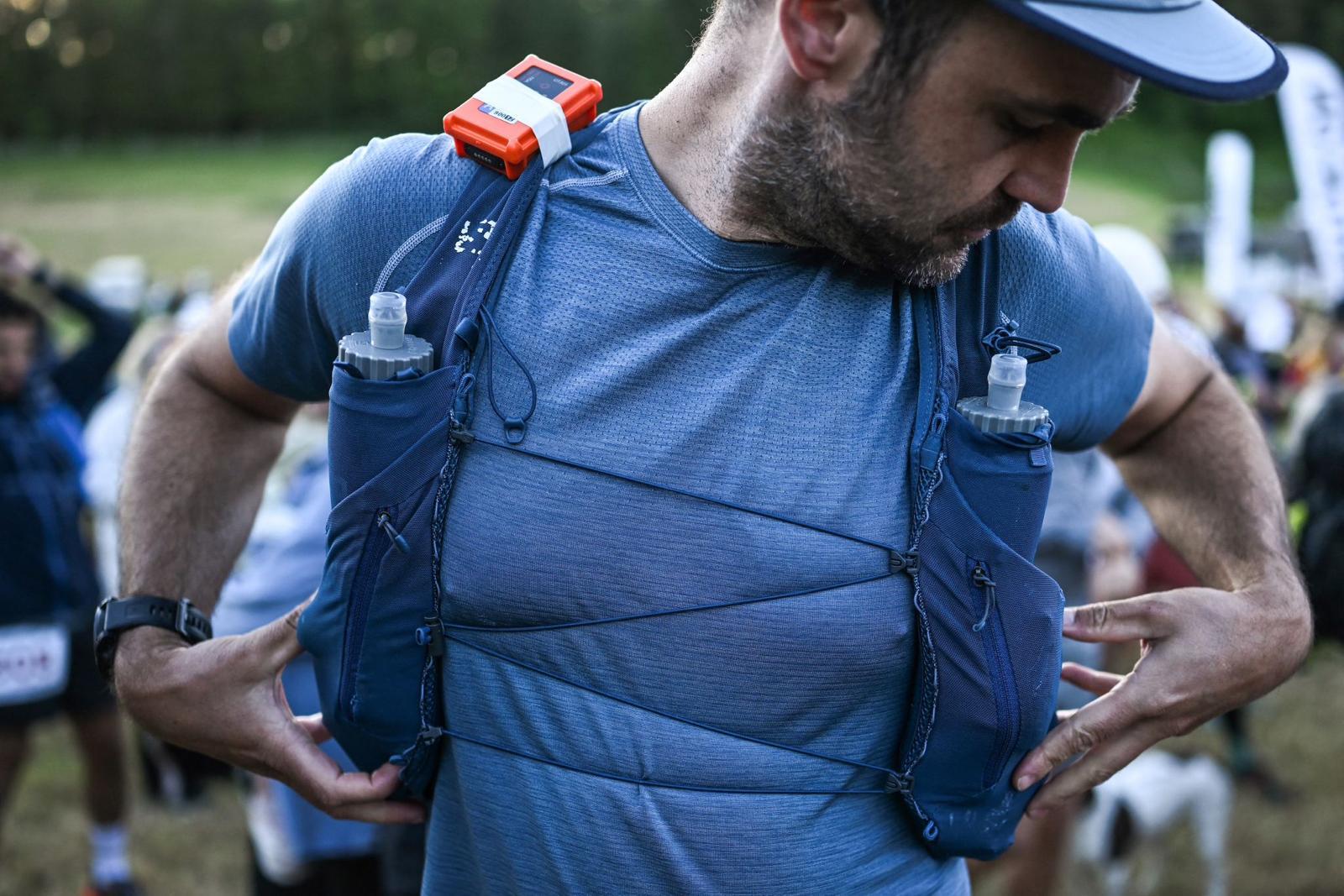
Everything started off reasonably well, I was running with 3 other people, 2 of which were experienced 100 mile racers. So I relied upon them a little for directions and pacing, which eased some of the pressures in my mind.
Within the first 10 miles or so it turned out there were some miles that were in the sand dunes, I hadn't clocked this on the route, on the surface I didn't see a problem, yes it would slow us down and yes it was more sapping, but the whole race was going to be! What I didn't account for was the sand in my shoes, more over not getting all of the sand out of my shoes come the end of the dunes section. I don't normally suffer from blisters, but then I don't normally have decomposed sandpaper in my shoes, the results of which meant the skin on the bottom of my feet was slowly getting rubbed off, as well as that on my littles toes. Without the experience of blisters before I tried to keep moving and bear the discomfort and pain.
Much later, maybe around mile 50/60, action needed to be taken, shoes off and try and kinesiology tape my feet back together. They were in a bad way and it wasn't looking great, worse still a couple of miles after getting them clean and taped there was a tidal water crossing, which had I arrived a few hours earlier would have been fine to navigate on stepping stones, but by now they were fully submerged. I managed to persuade a paddle boarder to grant me a day passage across the ford and resumed the race with only slightly damp feet. From that point on it was very much a walk/hobble than a run as the pain in my feet increased with each slow mile. Doing the mental arithmetic of if one mile is taking nearly 20 minutes - how many more hours will I have to endure to complete the remaining 25/30 miles - the result of this equation was the realisation that more than likely I would need to pull out of the race and that is where the first attempt ended, with a DNF - at 75 miles.
Many lessons were learnt on this first go, running through the night isn't all that bad, when you have company and singing, daybreak brings hope, it is possible to push on through when in pain, empty all sand from shoes, or better still swap shoes and socks, use trial running poles (something I had with me but my brain in a tired and weary state did not think to utilise)
There were more attempts after that. Another failure at 63 miles in early 2023. Then 87 miles in June 2024.
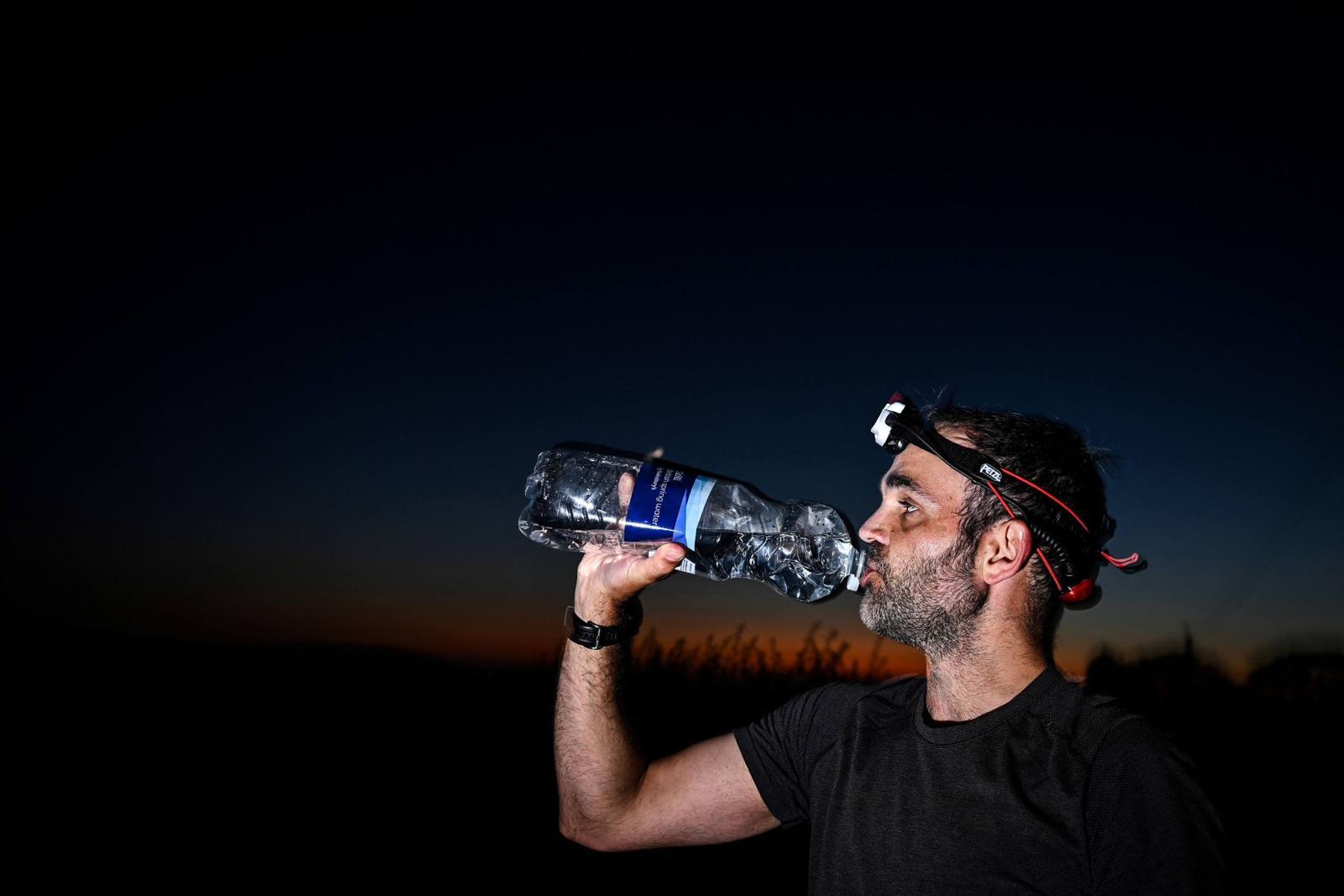
Each attempt taught me something new. The goal of 100 miles never went away. But after the last attempt in 2024, something shifted.
The trail, once a place of calm and clarity, became a place where my mind was loudest. Life had taken a few turns, and there was a lot to process. What had once been where I solved problems became where ‘what ifs’ took over, pushing me into overwhelm. Eventually, I just couldn’t run.
Listening to podcasts helped. Running at night helped, where staying upright required more focus. But neither felt like a real solution. What do you do when it’s not a physical injury stopping you, but a mental one?
I’d head out planning to run six, seven, eight miles and give up at three or four. I couldn’t do it. My love for running was fading, but I also knew I needed it. I had to get over this seemingly massive hump.
With time, big decisions, support from friends, and therapy, space slowly opened up in my mind for running again. It’s strange where the mind takes you when you don’t want it to - how destructive it can be, how hard it is to switch off.
Over the last few months, things have started to feel better. Running with freedom is returning. Finding new trails in a new area has helped. And with that has come a renewed desire to finally finish what I started.
With that in mind I decided to start the year and boost my running fitness with a 10km a day challenge, 310km in January, could that be done? Having realised I had run quite a bit over Christmas and in the week up until new year – I extended this challenge to be 400km in 40 days. I’ve never done this level of consistent running before, so I was sceptical. Oddly, with the exception of 2 days where I had a groin niggle it was relatively pain free, the hardest part being the logistics of getting out each day for that time! But the best bit, the absolute win of it all, my brain could cope again, my mind wandered, and to places that weren’t catastrophic or dark, it all made sense once again.
100 miles is still the goal, 2026 is the target.
Guy Shepherd
Keen runner and father of two, Guy can often be found running on Dartmoor or the coastal paths of South Devon.
Latest posts

An urgent message from the Kogui of Colombia to the engineers of AI.
The first in a series exploring the strange stories of the world’s 23rd highest mountain and what we might learn when the mountains are gods.
Subscribe To Our Newsletter!
PEAKS & PUEBLOS
Subscribe To Our Newsletter!
PEAKS & PUEBLOS
A global adventure community, celebrating stories of meaningful travel and exploration.
Subscribe To Our Newsletter!
Subscribe To Our Newsletter!
PEAKS & PUEBLOS
Subscribe To Our Newsletter!